
🔍 Key Points (Quick Summary)Main takeaway: The Nipah Virus Outbreak is deadly but not easily spread, and the US risk remains low right now. Who needs to care: Travelers, healthcare workers, and anyone following global health trends. Why it matters in 2026: Shifting outbreak patterns and new vaccine trials have changed how experts assess risk. |
Table of Contents
The Moment That Gets Everyone Googling
You see the headline. Another virus. Another outbreak. And your brain does the thing it learned in 2020.
Let’s slow that down.
The Nipah Virus Outbreak confirmed in India in early 2026 is serious, but it’s not a replay of COVID. It’s a reminder of how global health actually works now. Quiet surveillance. Fast containment. Real science instead of panic.
Here’s what’s actually happening, and why it matters without spiraling.
Nipah Virus Outbreak: What’s Different This Time
The virus itself isn’t new. Nipah has been around since the late 1990s. What’s new is where and when cases are showing up.
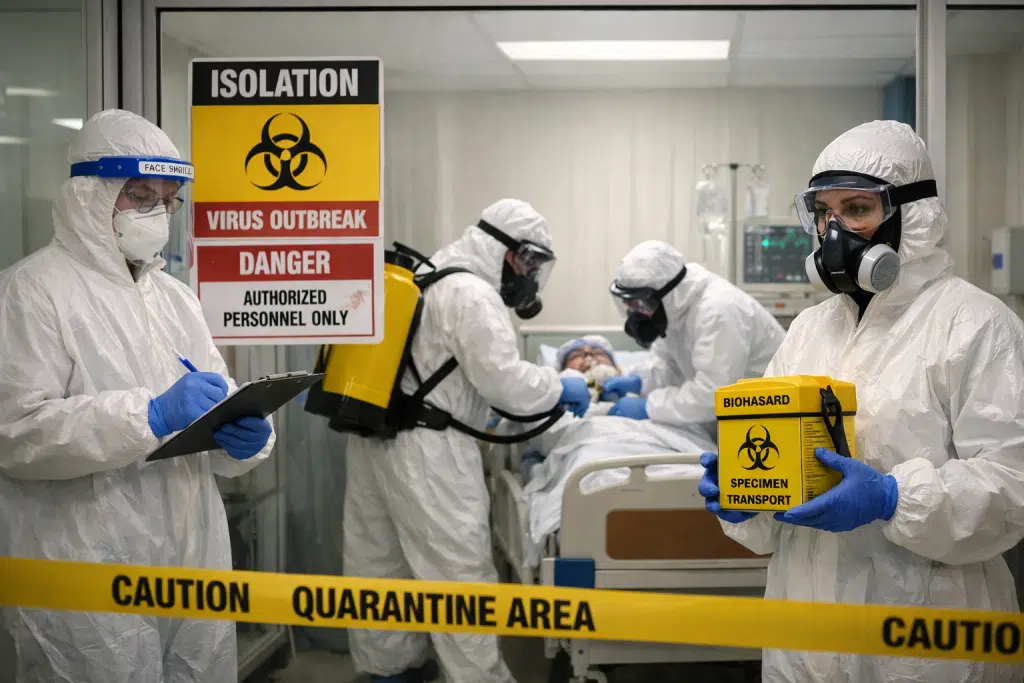
In January 2026, two healthcare workers in West Bengal tested positive after hospital exposure. Both were young. One became critically ill. The other recovered. No wider spread was detected.
That matters because it shows two things at once:
- Nipah is still extremely dangerous.
- It’s also still containable when hospitals act fast.
What Makes Nipah So Dangerous
Let’s be real. Nipah’s reputation isn’t hype.
Historically, fatality rates range from 40% to 75%, depending on the outbreak. The virus attacks blood vessels and the brain, often leading to severe encephalitis.
Here’s the key distinction though.
It’s not highly contagious like flu or COVID. Most spread happens through:
- Close caregiving contact
- Hospital exposure without proper protection
- Direct contact with infected animals or contaminated food
That helps explain why outbreaks stay small but severe.
How People Actually Get Infected
The virus lives naturally in fruit bats. Humans usually get exposed through very specific routes.
In South Asia, the biggest risk has been raw date palm sap contaminated by bats. That practice doesn’t exist in the US.
Person-to-person spread does happen, but almost always with:
- Prolonged close contact
- Exposure to bodily fluids
- Lack of protective equipment
Casual contact doesn’t appear to spread the virus.
What Symptoms Look Like (And Why Timing Matters)
Early symptoms are frustratingly ordinary:
- Fever
- Headache
- Muscle aches
- Fatigue
Then things can escalate quickly. Confusion. Seizures. Breathing problems.
Incubation usually runs 4 to 14 days, but longer delays have been documented. That’s why travel history matters so much for diagnosis.
Is the US at Risk Right Now?
Short answer: very low risk.
There’s no community spread in the US. No active cases. No travel bans.
But this isn’t passive reassurance. The US has systems in place that didn’t exist a decade ago:
- Hospital special pathogen units
- Rapid CDC consultation protocols
- National laboratory networks designed for rare viruses
If a case were imported, isolation would happen fast.
You can review official preparedness guidance here: CDC
Treatment Options Are Limited but Improving
There’s still no FDA-approved Nipah treatment. Care is mostly supportive.
That said, 2026 looks different than even five years ago.
- Remdesivir has shown strong survival benefits in animal models.
- Experimental monoclonal antibodies have been used in emergency cases.
- Vaccine trials are finally underway in high-risk regions.
That pipeline matters, even if the average person never needs it.
Why Experts Are Watching This Virus Closely
The concern isn’t a sudden explosion of cases. It’s patterns.
In 2025 and 2026, cases appeared:
- Outside typical seasons
- In new districts
- With unexplained exposure routes
That tells researchers the virus ecology may be shifting. Climate, land use, and animal-human contact all play roles.
This matters because prevention works best upstream.
What You Can Do Without Overreacting
If you live in the US, this isn’t a daily-life issue.
If you travel to affected regions:
- Avoid raw fruit juices and unwashed produce
- Avoid contact with bats or sick animals
- Follow CDC travel guidance
That’s it. No masks at the grocery store. No panic spirals.
For personal guidance or risk assessment, you can book a consultation here:
Dr Mian Farhan Haider MS.RD.
The Bigger Picture
The Nipah Virus Outbreak isn’t a warning siren. It’s a stress test.
Public health systems caught it early. Hospitals responded fast. Science is moving forward instead of playing catch-up.
At the end of the day, this is what preparedness looks like. Quiet. Boring. Effective.
That’s a good thing.
FAQ Section
Is Nipah virus spreading in the United States?
No. There are no confirmed cases or community spread in the US.
How contagious is Nipah virus compared to COVID?
Much less contagious. It requires close contact, not casual exposure.
Can Nipah virus be treated?
There’s no approved cure, but supportive care and experimental therapies exist.
Should travelers cancel trips because of Nipah?
Not generally. Travelers should follow CDC precautions in affected regions.
Is there a Nipah virus vaccine?
Several vaccines are in clinical trials, but none are publicly available yet.
