
📍 Key Points
|
Table of Contents
The Mid-Afternoon Slump Is Real. You’re Not Imagining It.
Here’s the thing. Around 3 or 4 p.m., your energy dips, focus slips, and hunger suddenly feels urgent. For people managing diabetes, that moment can come with another layer of stress. Is eating now going to help or just send blood sugar on a roller coaster?
This is where diabetic snacks between meals stop being a “diet choice” and start becoming a practical tool. Not a free-for-all. Not a rule you have to follow forever. Just a way to smooth out the day.
Let’s be real. Long gaps between meals can backfire. They can lead to sharp drops in blood sugar, rebound spikes later, or the kind of hunger that makes any plan feel impossible to stick to. Smart snacking is about preventing those extremes, not grazing nonstop.
Why Snacks Between Meals Matter More Than You Think
Blood sugar doesn’t just respond to what you eat. It responds to when you eat.
When meals are spaced far apart, glucose levels can dip low enough to trigger stress hormones. Cortisol and adrenaline step in to raise blood sugar, sometimes overshooting the mark. That helps explain why people see spikes after finally eating, even if the meal itself seems reasonable.
Strategic snacks can act like a bridge. They help keep glucose more stable and reduce the urge to overeat later. Emerging research and dietitian consensus suggest this pattern can support better day-long control, especially for people using CGMs or medications that affect appetite.
This matters because diabetes care in 2026 isn’t just about numbers. It’s about patterns.
What Makes a Snack “Diabetes-Smart”
Not all snacks play the same role. A cookie and a handful of nuts may have similar calories, but your body treats them very differently.
A smart snack usually includes:
- Protein to slow digestion and support satiety
- Fiber to blunt blood sugar rises
- Healthy fats to extend fullness
- Carbohydrates, when included, in controlled portions
The goal isn’t zero carbs. It’s balance.
The Snack Mistake Dietitians See All the Time
One common misstep is relying on snacks that are mostly refined carbs. Crackers alone. Pretzels alone. Granola bars that read “healthy” but act like candy once digested.
These foods digest quickly. Blood sugar rises fast, then drops. That cycle fuels fatigue and cravings, which often leads to more snacking, not less.
Another issue is skipping snacks entirely when hunger is clearly physical. White-knuckling through the afternoon can feel disciplined, but it often sets you up for overeating at dinner or late at night.
Whole-Food Snacks That Tend to Work Well
Whole foods aren’t magic, but their structure slows digestion in helpful ways.
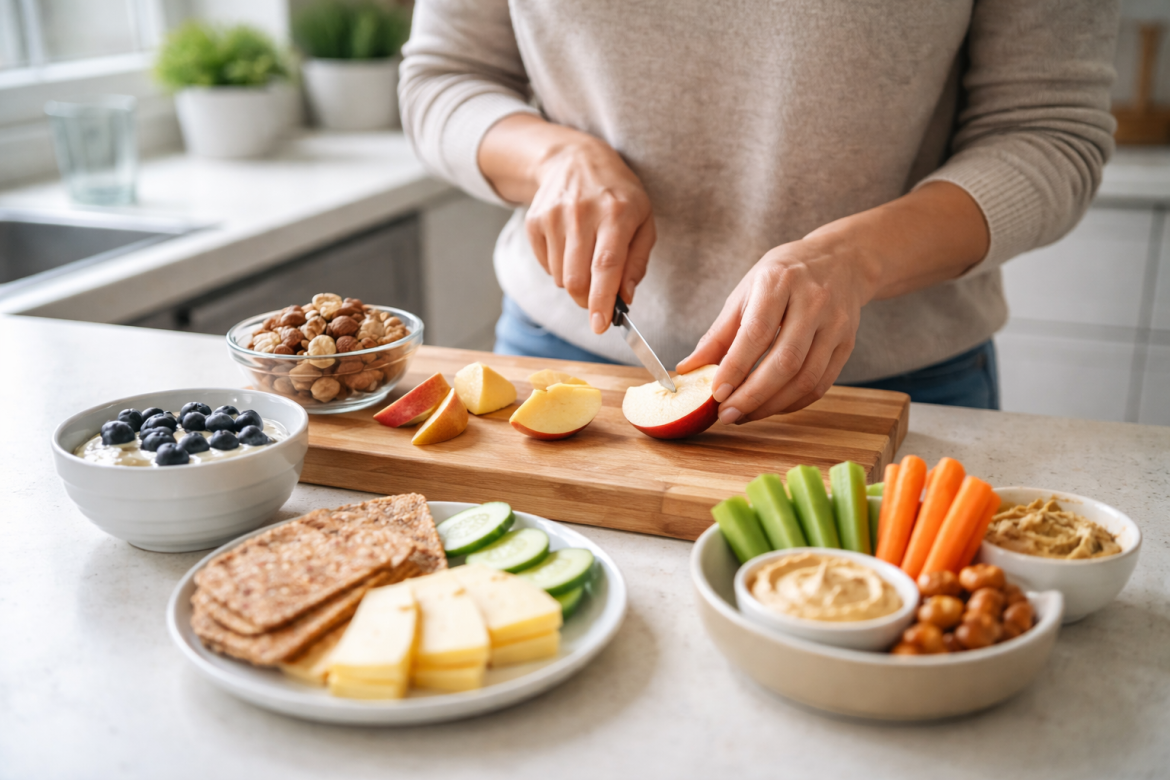
Some examples dietitians often recommend:
- Greek yogurt with a small handful of berries
- Apple slices paired with nut butter
- Cottage cheese with chopped vegetables
- Roasted chickpeas or edamame
- A handful of nuts with a piece of fruit
These combinations pair carbs with protein or fat, which helps flatten blood sugar curves.
What About Packaged Snacks?
Convenience matters. Life doesn’t pause for meal prep.
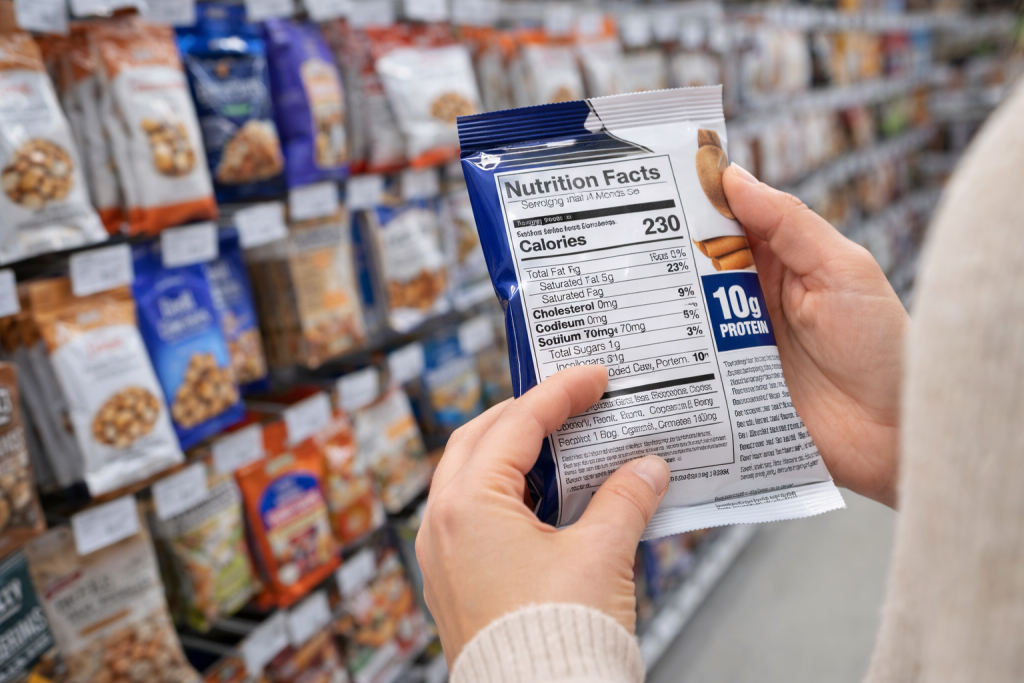
Packaged snacks can fit, but labels matter. Look for options with:
- At least 3 grams of fiber
- A clear protein source
- Minimal added sugars
Be cautious with products marketed as “net carb” or “sugar-free.” Sugar alcohols and certain fibers can still raise blood sugar for some people or cause digestive discomfort. CGM data has made this variability very obvious.
Timing Matters More Than Most People Realize
Snacking isn’t one-size-fits-all.
- Mid-afternoon: Often the most helpful window, especially if dinner is late
- Before exercise: May prevent drops in blood sugar, depending on intensity
- At night: Useful for some, not for others
Bedtime snacks can help people prone to overnight lows. But for those who wake up with high fasting glucose, late carbs may make things worse. This is where CGM data or targeted finger checks make a difference.
Who Benefits Most From Snacking Between Meals
Snacks tend to be most useful if you:
- Experience blood sugar dips between meals
- Feel extreme hunger that leads to overeating later
- Use insulin or medications that increase hypoglycemia risk
- Have long gaps between meals due to work or travel
They may be less helpful if you’re rarely hungry between meals and your glucose patterns are already steady.
Risks and Limitations to Keep in Mind
Snacking can drift into mindless eating if portions creep up or choices skew sugary. It can also add calories without improving nutrition if snacks replace balanced meals.
That’s why patterns matter more than perfection. Occasional spikes don’t undo progress. Repeated swings might signal it’s time to rethink timing or composition.
For authoritative guidance, see resources from the CDC or NIDDK.
External reference: https://www.cdc.gov/diabetes
External reference: https://www.niddk.nih.gov
Practical Dos and Don’ts
Do
- Pair carbs with protein or fat
- Use snacks to prevent extreme hunger
- Pay attention to how your body responds
Don’t
- Snack out of boredom without hunger cues
- Rely solely on refined carbs
- Assume “diabetic” on the label means blood sugar-friendly
The Bigger Picture
At the end of the day, diabetic snacks between meals aren’t about eating more. They’re about eating smarter. They’re a tool, not a rule.
Diabetes care in 2026 is increasingly personalized. CGMs, updated nutrition science, and lived experience all point to the same idea. Stability beats restriction. Patterns beat perfection.
If you want individualized guidance, you can schedule an appointment with our dietitian here:
https://drdevine.org/about-author/
FAQ Section
Do diabetics need snacks between meals?
Not always. Snacks help when there are long gaps between meals or frequent blood sugar dips.
What is the best snack for stable blood sugar?
Snacks that combine protein, fiber, and modest carbs tend to work best.
Can snacking raise blood sugar too much?
Yes, especially if snacks are high in refined carbs or eaten without hunger.
Are store-bought diabetic snacks safe?
Some are, but labels matter. Fiber type and sweeteners can affect glucose.
Should I snack if I’m not hungry?
Usually no. Snacks work best when they respond to physical hunger or glucose trends.
