

If you’ve spent even five minutes on American health TikTok, you’ve seen it. Ozempic everywhere. Before-and-after photos. Wild weight loss claims. And a lot of people quietly wondering, Do I really need a weekly injection… or could fixing my diet do the same thing?
That’s the real question. Not Ozempic or nutrition. But whether structured nutrition therapy alone can deliver blood sugar control anywhere close to what GLP-1 drugs like Ozempic offer for people with Type 2 diabetes.
Let’s talk about what the science actually says, minus the hype.
How Doctors Measure “Success” in Type 2 Diabetes
Before we compare anything, we need to agree on what “working” actually means.
In diabetes care, effectiveness usually comes down to a few core markers:
- HbA1c reduction (the big one)
- Fasting and post-meal blood sugar
- Weight and waist circumference
- Need for more meds… or fewer
- Long-term sustainability
Medications tend to shine in short-term HbA1c drops. Nutrition therapy shines in durability when people stick with it. The tension lives right there.
What Ozempic Really Delivers
GLP-1 drugs like Ozempic are popular for a reason. In randomized controlled trials, semaglutide consistently lowers HbA1c by about 1.0 to 1.8 percentage points. That’s significant. For many patients, it’s the strongest glucose drop they’ve ever seen.
Weight loss is another driver. Most people with Type 2 diabetes lose 9 to 13 pounds on average in the first year. Appetite goes down. Portions shrink without a white-knuckle battle.
From a purely numbers standpoint, Ozempic works.
The Less-Talked-About Downsides
Here’s the part that doesn’t trend on social media.
GLP-1 drugs don’t fix insulin resistance at its root. They manage it. Which means when the drug stops, the benefits usually fade.
Long-term studies and real-world data show:
- GI side effects are common enough to stop treatment
- Lean muscle loss can occur without proper nutrition
- Blood sugar often rebounds after stopping
- Cost and insurance coverage limit access
Ozempic is powerful. It’s also dependency-based if diet doesn’t change alongside it.
What Nutrition Therapy Can Actually Do
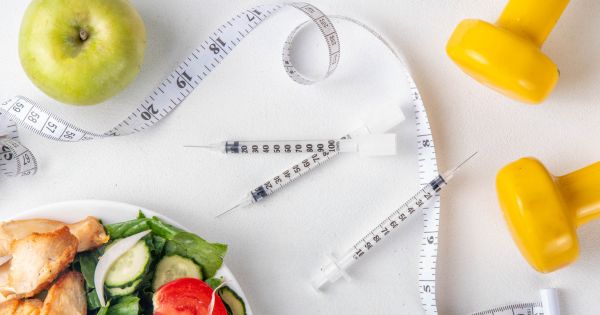
Now let’s talk food. Not “eat better” vibes. Structured medical nutrition therapy.
Clinical trials using low-carb, Mediterranean, calorie-controlled, and professionally guided nutrition plans show HbA1c reductions ranging from 0.5 to 2.0 percentage points. Yes, that overlaps with GLP-1 drugs.
In early Type 2 diabetes, some studies even show partial or full remission, meaning normal blood sugars without medication for extended periods.
That doesn’t happen by accident. It happens with:
- Carb awareness
- Protein prioritization
- Consistency, not perfection
- Ongoing support
Sustainability: Where the Real Battle Is
Here’s where things get honest.
Diet-only approaches fail when they’re casual. They succeed when they’re structured.
Medication approaches fail when people rely on the drug alone and never learn how to eat once hunger comes back.
Studies consistently show:
- People stopping Ozempic without diet changes regain weight and HbA1c
- People using nutrition therapy with support maintain control longer
- Combining both delivers the strongest outcomes
No surprise there.
Do Any Studies Compare Diet vs GLP-1 Drugs Directly?
Head-to-head trials are limited. But comparative analyses show that intensive lifestyle interventions can approach medication-level HbA1c reductions, especially early in the disease.
What medications offer is speed and predictability.
What nutrition offers is long-term leverage.
That’s why major guidelines don’t pick sides.
What Diabetes Guidelines Actually Say
Both the American Diabetes Association and the American Association of Clinical Endocrinology are clear:
- Nutrition therapy is foundational
- Medications are layered on when needed
- GLP-1 drugs work best with dietary changes
You can read their official guidance directly here:
High-authority, high-trust sources. No influencer noise.
What Happens When Ozempic Stops
This matters more than most people think.
When Ozempic is discontinued:
- Appetite returns
- Calorie intake creeps up
- Blood sugar often rises within months
Without nutrition skills in place, the body simply goes back to old patterns. That’s not failure. That’s biology.
Can Nutrition Reduce or Eliminate Medication?
In many cases, yes.
Structured nutrition therapy has been shown to:
- Delay starting medication
- Reduce dosages
- Improve insulin sensitivity
- Lower overall medication burden
It doesn’t replace medication for everyone. But it changes the trajectory.
The Bottom Line
So, can nutrition alone match Ozempic?
Sometimes.
Especially early. Especially with support. Especially when it’s structured.
But the strongest, most sustainable results come when we stop treating food and medication like rivals and start using them as teammates.
Ozempic can open the door.
Nutrition keeps it from slamming shut.
“best foods for insulin resistance”
FAQs
1. Can diet alone replace Ozempic for diabetes?
In some early cases, yes. But results depend on structure, support, and disease duration.
2. How much can HbA1c drop with diet changes?
Clinical trials show reductions of 0.5–2.0 percent with structured nutrition therapy.
3. Does blood sugar go up after stopping Ozempic?
Often, yes, especially if dietary habits don’t change.
4. Is Ozempic better than lifestyle changes?
It’s faster, but not more sustainable without nutrition support.
5. Should diet and Ozempic be used together?
Most guidelines recommend combining both for best long-term results.