
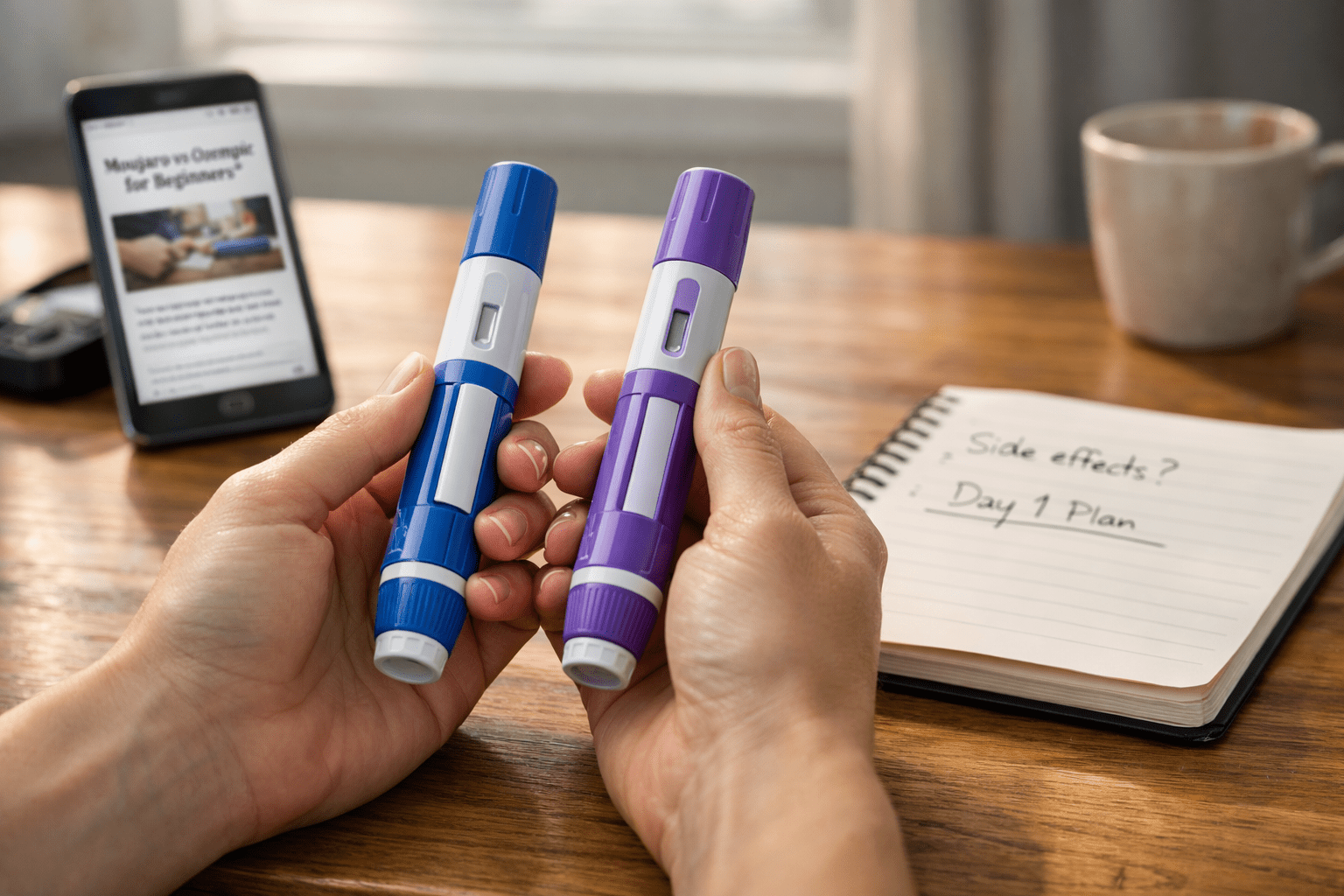
🔍 Quick Summary (TL;DR)
- Main Takeaway: If you’re researching Mounjaro vs Ozempic for beginners, the biggest risk isn’t choosing the “wrong” drug. It’s starting with the wrong expectations.
- Who Needs to Care: Anyone beginning Mounjaro (tirzepatide) or Ozempic (semaglutide) for diabetes, weight loss, or metabolic health.
- Why It’s Trending Now: GLP-1 use is exploding in the US, CGMs are mainstream, and early drop-off rates remain stubbornly high due to avoidable mistakes.
- The Bottom Line: The early phase does the heavy lifting. Get that wrong, and even the best drug can fail you.
Why Mounjaro vs Ozempic for beginners is the wrong first question
Right out of the gate, let’s clear something up. Most beginners frame this decision as a head-to-head battle. Which one’s stronger? Which one melts weight faster? Which one does TikTok like more this week?
Here’s the kicker: for beginners, the medication choice usually matters less than how you start.
In real-world US data, a large chunk of patients stop GLP-1 drugs within the first few months. Not because they don’t “work,” but because nausea hits, expectations crash, or nobody explained what normal adaptation actually looks like. The early phase does the heavy lifting. Get that wrong, and even the best drug can fail you.
How these drugs actually work (and why that matters early)
If you want to survive the first month, you have to understand the engine under the hood.
Ozempic (semaglutide) targets one hormone pathway: GLP-1. It slows stomach emptying, increases satiety, and improves glucose regulation. It’s been around longer, which means clinicians know its quirks well. It’s the reliable workhorse.
Mounjaro (tirzepatide) hits two pathways: GLP-1 and GIP. Research suggests this dual action can amplify metabolic effects, including greater average A1C and weight reductions in trials (up to 21% vs ~15%).
But let’s be real. Stronger signaling doesn’t mean smoother sailing. For beginners, it can also mean more pronounced side effects if dosing moves too fast. This is why many clinicians still start first-timers on Ozempic. Not because Mounjaro is “too much,” but because predictability matters early.
The first-week shock nobody prepares you for
The data suggests most early side effects aren’t a sign something’s wrong. They’re a sign your gut-brain system is being rewired in real time.
Common first-week experiences include:
- Early fullness after just a few bites.
- Nausea that comes and goes like waves.
- Slower digestion (sometimes uncomfortably slow).
- Food aversions that feel random (suddenly, coffee smells wrong).
💡 Recommended Reading: If you are worried about how certain foods affect your levels early on, check out our guide on Understanding Diet Spikes for the Newly Diagnosed. It breaks down exactly why your post-meal numbers might look scary in the first week.
Here’s what trips people up: social media makes it look like nausea equals failure. In reality, it often means you’re escalating too quickly or eating like your stomach hasn’t changed (because mentally, it hasn’t yet).
One specific issue? The Sulphur Burp. It sounds gross, but it’s a standard sign that gastric slowing is working. Food sits in your stomach longer, fermenting. The fix isn’t quitting the drug; it’s skipping high-fiber veggies like kale at dinner.
The “start low, go slow” rule people keep ignoring
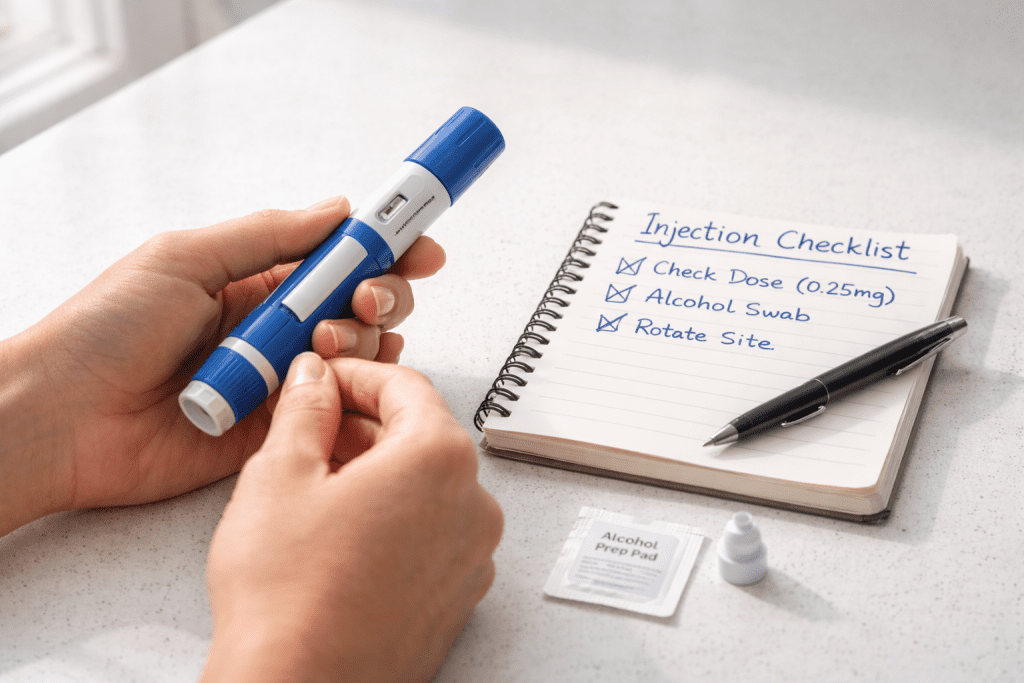
The starter doses on both Mounjaro (2.5mg) and Ozempic (0.25mg) aren’t meant to deliver dramatic results. They’re training wheels.
Yet beginners often:
- Push doses early to “speed things up.”
- Quit after mild nausea instead of adjusting.
- Eat large or fatty meals despite delayed gastric emptying.
Research points to a clear pattern: slower titration improves long-term adherence. Translation? The people who tolerate the early phase tend to stay on therapy long enough to see real benefits.
Weight loss myths that wreck beginner confidence
Let’s talk about the elephant in the room. Weight loss doesn’t happen in a straight line. Especially early.
Clinical trials show averages. Your body is not an average. Some beginners lose quickly. Others don’t see much movement for weeks while appetite, insulin sensitivity, and digestion recalibrate. Comparing your week-two scale to someone else’s viral before-and-after is a fast track to quitting.
It’s not just hype. The early phase is more about metabolic setup than visible change.
Which beginners struggle more on Mounjaro vs Ozempic
Certain patterns show up consistently in clinical practice:
- GI Sensitivity: People with prior stomach issues may struggle more early on Mounjaro due to the dual-agonist intensity.
- Aggressive Expectations: Those who treat this like a sprint often crash on either drug.
- No Nutrition Guidance: Patients without a meal plan are more likely to stop. GLP-1s reduce appetite, not nutritional needs.
Insurance also plays a bigger role than people admit. In the US, coverage often decides the starting drug. Switching later is possible, but frustration spikes when expectations don’t match reality.
The early mistakes that quietly derail results
This is where things usually go sideways. If you avoid these three traps, you’re ahead of 90% of patients.
Mistake #1: Treating the drug as the plan GLP-1s reduce appetite. They don’t replace nutrients. Without enough protein (aim for 100g+), beginners risk muscle loss (sarcopenia) and fatigue. You can end up “skinny fat” with a lower metabolic rate than when you started.
Mistake #2: Forgetting hydration Reduced thirst plus smaller meals can mean accidental dehydration. This worsens nausea and constipation instantly.
Mistake #3: Stopping instead of adjusting Most early side effects respond to slower titration, meal changes (smaller volume), or timing tweaks. Stopping outright often isn’t necessary.
The Financial Reality in 2026
We can’t ignore the price tag. While generic semaglutide is on the horizon (expected March 2026), right now, supply chains are still tight.
- Coupon Cards: The manufacturers offer savings cards, but they strictly require commercial insurance coverage. If you are on Medicare, you are legally locked out of these discounts.
- Shortage Strategy: Don’t start your first pen until you have your second month’s box in the fridge. “Stop-start” therapy due to shortages sensitizes your body to side effects, effectively forcing you to restart the nausea clock from zero.
Check current FDA shortage lists here
What we still don’t know in 2026
Despite the explosion of GLP-1 use, gaps remain:
- Long-term real-world adherence data.
- Best strategies to protect lean mass (muscle) specifically in older adults.
- Who truly benefits more from dual agonists (Mounjaro) vs single-pathway drugs (Ozempic) based on genetics.
Most studies still focus on weight and A1C, not lived experience. That’s starting to change, but slowly.
At the end of the day, for beginners, Mounjaro vs Ozempic isn’t about picking a winner. It’s about avoiding early errors that turn a powerful tool into a short-lived experiment. Patience isn’t sexy. But it’s often the difference between quitting and staying the course.
FAQs
Is Mounjaro stronger than Ozempic for beginners?
Research suggests greater average effects, but tolerance matters more early on.
How long should beginners expect side effects?
Most improve within weeks if dosing is gradual.
Should beginners lose weight in the first month?
Some do, some don’t. Early metabolic changes often come first.
Can you switch if the first drug doesn’t work?
Yes, under medical guidance.
Do GLP-1s stop working if you mess up early?
There’s no evidence of permanent loss of effect, but early dropout limits benefit.
