

🔍 Quick Summary
- The main takeaway: Waking up drenched in sweat isn’t just a sleep issue. For many people with diabetes, diabetes night sweats are a biological alarm tied to overnight blood sugar crashes or early-morning spikes.
- Who needs to care: Anyone with Type 1 or Type 2 diabetes who wakes up between 2:00 and 4:00 AM feeling clammy, wired, exhausted, or strangely “hungover.”
- Why it’s trending now: Thanks to continuous glucose monitors, we’re finally seeing what’s been happening overnight all along. And the data is explaining a lot of miserable mornings.
The “Cold Sweat” Reality Check
Let’s be real. There’s a specific kind of panic that comes with waking up at 3:00 AM soaked in sweat. Your sheets are wet, your heart’s racing, and your brain feels like it just got yanked out of deep sleep without warning.
If you’re living with diabetes, this usually isn’t about the room being too warm. This is your body pulling the fire alarm.
Diabetes night sweats aren’t just uncomfortable. They’re often the most honest feedback your metabolism gives you. The problem is that most people misread the signal. They assume they’re “just running hot,” when in reality their blood sugar is doing something dramatic while they sleep.
Right out of the gate, this matters because sleep isn’t passive. Overnight glucose control is active, fragile, and heavily influenced by hormones, medications, and what you ate hours earlier.
Related Reading: If you are struggling with unpredictable numbers, check our guide onhow to manage diet spikes for newly diagnosed Type 2 diabetes.
Diabetes Night Sweats and the Overnight Crash
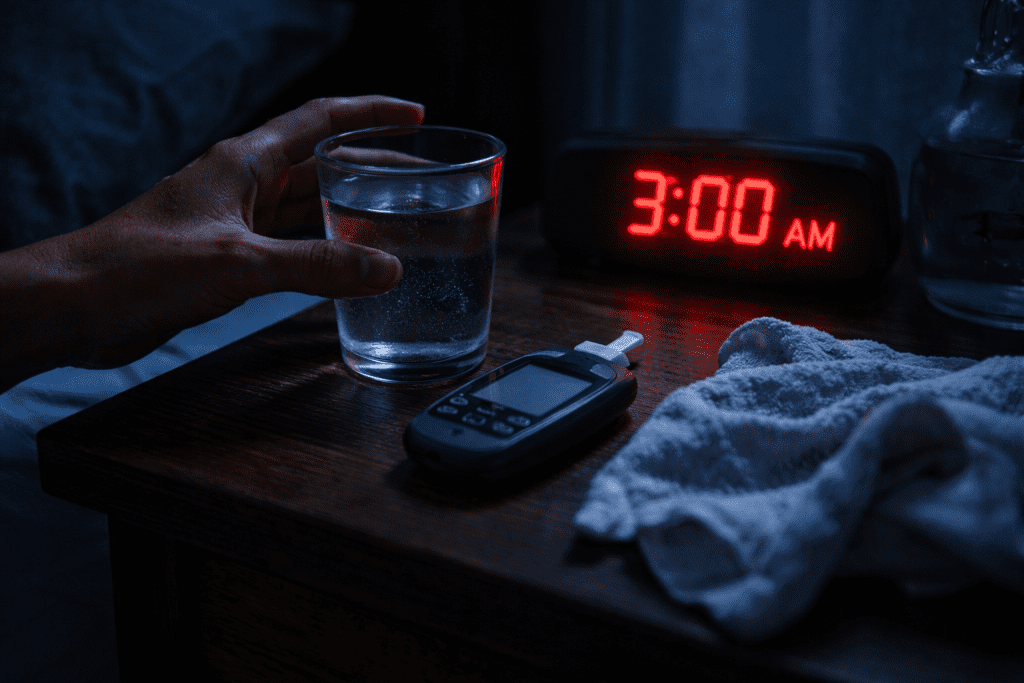
The most common cause of diabetes night sweats is something called nocturnal hypoglycemia, or a blood sugar drop during sleep.
Here’s the plain-English version.
When your blood sugar falls too low overnight, your brain interprets it as an emergency. You’re asleep, so you don’t feel the early warning signs like hunger or shakiness. Instead, your nervous system takes over. It dumps stress hormones, especially adrenaline, into your bloodstream to force your liver to release stored glucose.
That adrenaline surge does two things at once:
- It jerks you awake
- It triggers intense sweating
This isn’t “I got warm under the covers” sweat. It’s a cold, clammy, fight-or-flight sweat. Research consistently shows that sweating is one of the most common physical signs of hypoglycemia, especially at night.
Here’s the part people miss. Many individuals develop hypoglycemia unawareness, meaning they don’t feel lows until the body hits the panic button. The sweat is often the first symptom loud enough to wake you up. Ignore it, and you may wake up with a pounding headache, brain fog, and fatigue that lasts all day. Patients often describe this as a “sugar hangover.”
The 3AM Question: Dawn Phenomenon vs Somogyi Effect
Now comes the confusing part. Some people wake up sweaty, check their blood sugar, and see a high number. That doesn’t mean the sweat wasn’t glucose-related.
This is where the difference between the Somogyi effect and the dawn phenomenon matters.
The Somogyi Effect (The Rebound)
This is a rebound response. Your blood sugar drops too low around 2:00–3:00 AM, triggering night sweats and stress hormones. Your body overcorrects. By morning, your blood sugar is high.
- The key clue: the sweat happened before the high reading.
The Dawn Phenomenon (The Natural Rise)
This one isn’t a crash. It’s timing. Between roughly 4:00 and 8:00 AM, your body releases cortisol and growth hormone to prepare for waking up. In people without diabetes, insulin keeps pace. In diabetes, it often doesn’t. Blood sugar rises steadily, without a low beforehand.
The practical difference matters because the fixes are opposites. Treating a dawn rise like a nighttime low can make things worse. Many clinicians recommend checking glucose around 3:00 AM for a few nights, or using CGM data, to tell the difference.
Can Nerve Damage Cause Night Sweats?
Sometimes blood sugar isn’t the whole story.
Long-standing diabetes can damage the autonomic nerves that control things like heart rate, digestion, and temperature regulation. This is called diabetic autonomic neuropathy.
When these nerves misfire, sweating patterns can become unpredictable. Some people sweat excessively at night even when glucose looks stable. Others notice sweating while eating or unusual patterns where parts of the body sweat unevenly.
If your numbers are well controlled but night sweats persist, this is worth discussing with an endocrinologist. Reputable sources like the Mayo Clinic or NIDDK cover this complication in detail.
The Bedtime Snack Strategy That Actually Helps
So what helps reduce diabetes night sweats in the real world? For many people, the answer isn’t eating less. It’s eating smarter.
Old advice often said to avoid food before bed. But for preventing overnight lows, a strategic bedtime snack can be protective. The goal isn’t to spike blood sugar. It’s to provide slow, steady fuel so your liver doesn’t panic overnight.
What usually backfires:
- Juice or soda
- Candy
- White bread or crackers
These spike glucose and crash it right back down.
What tends to help:
- A small portion of complex carbs paired with protein or fat
- Apple slices with peanut butter
- Greek yogurt with berries
- Nuts with a small piece of fruit
In some clinical settings, uncooked cornstarch is used because it digests very slowly, releasing glucose over several hours. At the end of the day, sleep quality is part of metabolic health. A perfect A1C doesn’t mean much if your nights are chaotic.
Final Word
Waking up sweaty at 3AM isn’t something to brush off, but it’s also not something to panic about.
Diabetes night sweats are a clue, not a diagnosis. They’re often your body’s way of flagging overnight glucose instability, hormone shifts, or nervous system stress.
With today’s tools, especially CGMs, we can finally see what’s been happening in the dark. The heavy lifting now is interpretation, not fear. If you’re waking up soaked, don’t just change the sheets. Check the pattern. Your body is trying to tell you something.
People Also Ask (FAQ)
Why do I sweat so much at night with diabetes?
It’s usually a sign of your blood sugar dropping too low (hypoglycemia) while you sleep. Your body releases adrenaline to fix the low, which causes that “cold sweat” feeling. However, it can also be caused by nerve damage or rapidly rising blood sugar.
Can high blood sugar cause night sweats too?
Yes, it can. While lows are the classic cause, very high blood sugar can make you sweat as your body tries to get rid of the excess glucose through urine (and sweat). Plus, the hormonal shifts of the Dawn Phenomenon can trigger it.
What is the best bedtime snack to prevent night sweats?
You want something that digests slowly. Think protein and healthy fats mixed with a little fiber. A small scoop of Greek yogurt with nuts, or a slice of whole-grain toast with avocado, can keep your levels steady through the night.
How do I know if it’s the Dawn Phenomenon or Somogyi Effect?
You have to catch it in the act. Set an alarm for 3:00 AM and test your blood sugar. If it’s low, you’re likely experiencing the Somogyi Effect (rebound). If it’s normal or high, it’s likely the Dawn Phenomenon.
When should I see a doctor about night sweats?
If you’re waking up sweaty more than once a week, or if you wake up confused and groggy (a sign of a severe low), you need to talk to your doctor. They might need to adjust your insulin timing or basal rates.
