
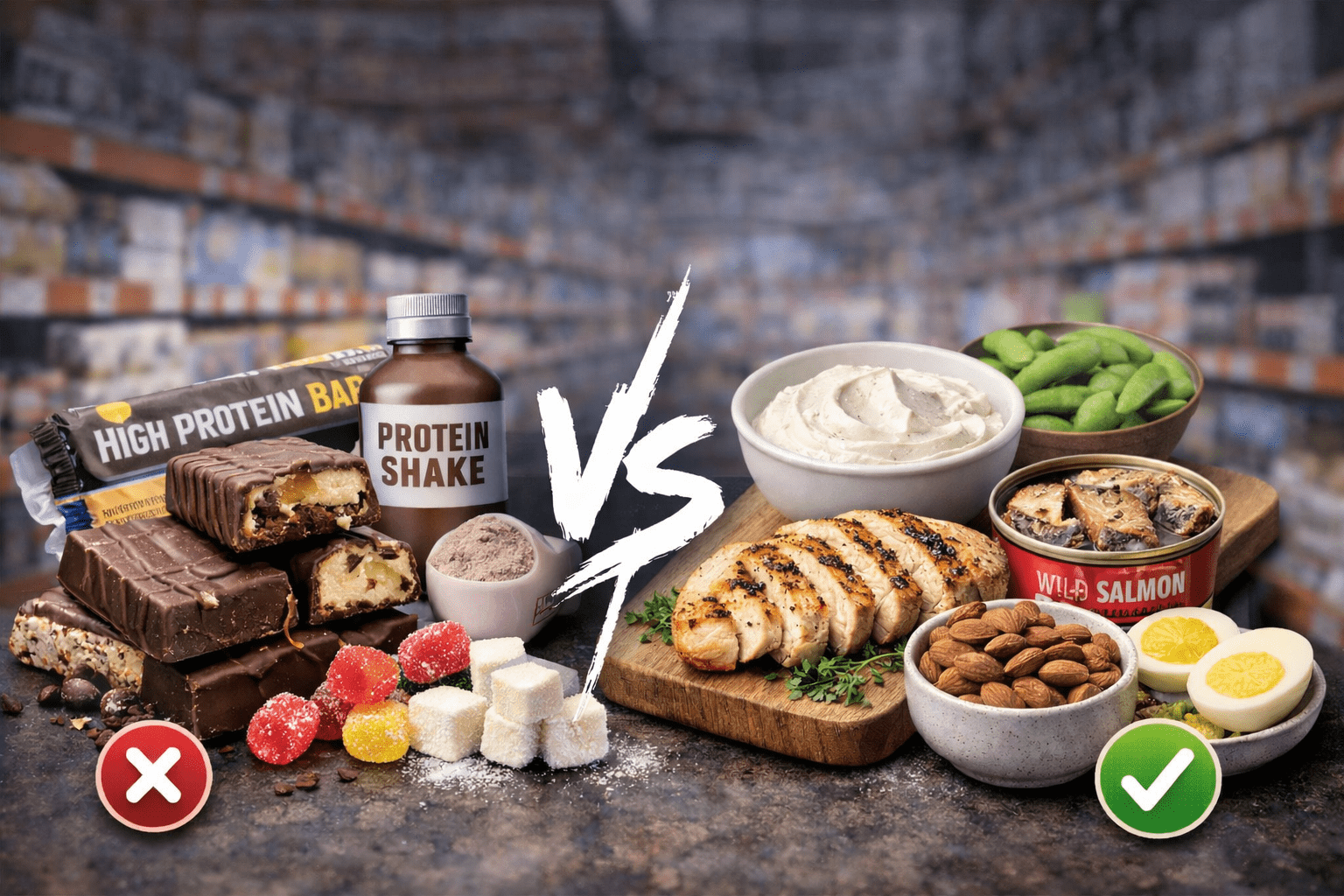
Clinically Verified by Dr. Mian Farhan Haider, MS Clinical Nutritionist & RD
🔍 QUICK SUMMARY
The Main Takeaway High-protein foods at Costco can be a game-changer for blood sugar, but only if you cut through the marketing noise. In 2026, the key is prioritizing whole, minimally processed staples over “fitness-branded” snacks that often hide glucose-spiking ingredients.
Who This Matters For This is for anyone managing Type 2 diabetes or prediabetes, and especially the millions of Americans now using GLP-1 medications who need to prioritize protein to protect muscle mass without triggering unexpected sugar spikes.
Why It’s Trending Now We’re living in the “Protein-Everything” era. While the 2026 market is flooded with high-protein options, dietitians are sounding the alarm on “protein washing”—where unhealthy products are marketed as healthy just because they’ve got added whey or soy isolates. Costco is the front line for this trend.
The Warehouse Trap: Why “Protein” Doesn’t Always Mean “Safe”
Let’s be real: walking into a Costco in 2026 feels a little like entering a cathedral of “optimization.” Everywhere you look, there’s a new bar, a new shake, or a new frozen “wellness” bowl promising 30 grams of protein and “clean” energy. If you’re living with diabetes, that promise sounds like music to your ears. We’ve been told for years that protein is the safe bet—the macro that doesn’t cause the dreaded post-meal spike.
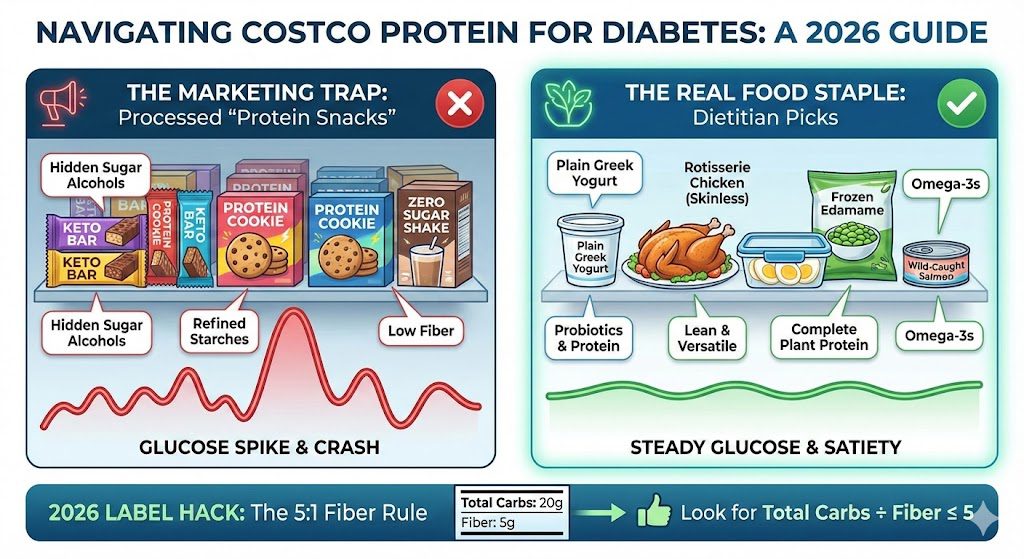
But here’s the kicker: the “protein halo” is real, and it’s leading a lot of well-intentioned shoppers astray. Just because a box has “PROTEIN” plastered across the front in bold, blocky letters doesn’t mean it’s doing your A1c any favors. In fact, some of these modern snacks are just highly engineered delivery systems for sugar alcohols and refined starches.
At the end of the day, managing diabetes isn’t about eating as much protein as humanly possible; it’s about choosing the right types of protein that play nice with your insulin sensitivity. We’re going to dive into how to navigate those massive aisles without getting played by the latest wellness trends.
The GLP-1 Revolution and the Muscle Math
We can’t talk about health in 2026 without acknowledging the elephant in the room: the massive shift in how we manage weight and glucose through GLP-1 medications. Whether you’re on a brand-name therapeutic or managing through lifestyle alone, the goal has shifted. We aren’t just looking to “lose weight” anymore; we’re looking to keep our muscle while we do it.
This is where the high protein diabetes diet becomes your best friend. When your appetite is lower—thanks to those meds or just a more disciplined approach—every bite has to count. Protein is the heavy lifting macro here. It keeps you full, it maintains your lean mass, and it slows down the absorption of any carbs you happen to eat.
But—and this is a big but—more isn’t always better. Your body can only process so much protein at once for muscle synthesis. Research points to the fact that spreading your protein out across the day is way more effective than trying to smash a 60-gram protein steak for dinner and calling it a day. (And no, we aren’t talking about those “protein-loading” social media challenges that were big a few years ago).
👉 Want a deeper breakdown of how protein and carbs work together for diabetes?
Read this complete guide: The High-Protein Low-Carb Diabetes Manual
Why Your Glucose Monitor Might Not Love “Protein” Snacks
You’ve probably been there: you grab a “keto-friendly” protein bar at the Costco checkout, eat it on the drive home, and an hour later, your continuous glucose monitor (CGM) is screaming at you. What gives?
The thing is, many ultra-processed high-protein foods rely on “net carb” math that doesn’t always translate to the real world. They use sugar alcohols like maltitol or even newer sweeteners that, while technically lower on the glycemic index, still cause a significant rise in some people.
Then there’s the “protein-to-fat” ratio. A lot of Costco’s bulk snacks are high in protein but also loaded with saturated fats and sodium. While that might not spike your sugar immediately, it’s not exactly checking the boxes for heart health—which is a huge deal when you’re managing diabetes. We want healthy snacks for diabetics that support the whole body, not just the number on the glucose meter.
Dietitian-Approved: The “Real Food” Costco Staples
If you want to shop like a pro, you’ve got to look past the flashy cardboard displays in the middle of the store and head for the edges. Here is the “Gold Standard” list of Costco protein buys that actually work for blood sugar management.
1. Kirkland Signature Plain Greek Yogurt
This is a massive win for your fridge. It’s high in protein, contains probiotics for gut health, and has zero added sugar. The “plain” part is non-negotiable. Those fruit-on-the-bottom packs are basically dessert in disguise.
- Pro Tip: If it’s too tart, add a handful of Costco’s frozen organic blueberries. The fiber in the berries plus the protein in the yogurt creates a slow-burn energy profile that won’t leave you crashing.
2. The Iconic Rotisserie Chicken
It’s the ultimate Costco hack. It’s cheap, it’s ready to eat, and it’s pure protein. However, let’s talk about the skin. It’s delicious, we know, but it’s where all the sodium and saturated fat live. If you’re watching your blood pressure alongside your blood sugar, pull the skin off before you dig in.
3. Wild-Caught Canned Salmon and Sardines
Right out of the gate, these are some of the most nutrient-dense foods in the warehouse. You get high-quality protein plus omega-3 fatty acids. The data suggests omega-3s are key players in reducing the chronic inflammation that often accompanies Type 2 diabetes. Plus, they have a shelf life that survives even the most disorganized pantry.
4. Frozen Edamame (In the Shell)
This is a hidden gem for the plant-based crowd—or anyone, really. Edamame is a rare “complete” plant protein, meaning it has all the amino acids you need. Because it’s packed with fiber, it has a very minimal impact on blood sugar. It’s the perfect “mindless” snack that actually does some good.
5. Hard-Boiled Eggs (The Pre-Peeled Kind)
Let’s be real, nobody likes peeling eggs. Costco sells these in bulk, and they are a lifesaver for busy mornings. Two eggs give you about 12 grams of protein with essentially zero carbs. It’s the perfect base for a blood-sugar-friendly breakfast.
Decoding the 2026 Nutrition Label
Reading a label at Costco can feel like trying to crack a secret code. Between the “Net Carbs,” “Keto-Certified,” and “Plant-Powered” labels, it’s easy to get overwhelmed. Here is how we look at a label in 2026:
- The 5:1 Fiber Rule: Look for foods where the ratio of total carbs to fiber is 5-to-1 or less. If a snack has 25g of carbs but only 1g of fiber, your blood sugar is going to feel it.
- The “Added Sugar” Reality Check: We’ve moved past just looking at “Total Sugar.” Check the “Added Sugar” line. If it’s more than a few grams per serving, put it back. Your body doesn’t care if it’s “organic cane sugar” or “agave nectar”—it all hits the bloodstream the same way.
- The Ingredient Shortlist: If the first three ingredients are some form of syrup, flour, or starch, it’s not a health food, no matter how much whey protein they pumped into it.
Are “Keto” Foods Actually Safe?
This is a “vibe-check” for the keto aisle. Just because something is low-carb doesn’t mean it’s healthy for a person with diabetes. Many keto products replace sugar with heavy amounts of saturated fats (think coconut oil and butter) to keep the flavor up.
While a lower-carb approach can be great for glucose control, we have to be careful about heart health. People with diabetes are at a higher risk for cardiovascular issues, so swapping a sugar spike for a cholesterol spike isn’t a winning trade. Focus on Costco protein for diabetes options that prioritize unsaturated fats, like nuts, seeds, and fatty fish.
Making the Bulk Buy Work for You
The danger of Costco is the sheer volume. Buying a three-pound bag of almonds is a great deal, but if you eat them by the handful while watching Netflix, those calories and fat grams add up fast. (Yes, even “healthy” fats can lead to weight gain if overdone, which can negatively impact insulin resistance.)
The goal is to use these bulk buys as “components” for balanced meals.
- Step 1: Start with your protein (e.g., Rotisserie chicken or canned tuna).
- Step 2: Add a high-fiber veggie (e.g., Costco’s bulk organic spinach or frozen broccoli).
- Step 3: Add a small amount of “smart” carbs (e.g., a half-cup of those bulk black beans).
This “Plate Method” is still the most reliable way to keep your CGM graph looking like a gentle rolling hill instead of a jagged mountain range.
The Bottom Line: Patterns over Hacks
We’ve come a long way in our understanding of nutrition, but some things remain a bit murky. While we know protein helps with satiety (that feeling of being full), the research is still mixed on whether a “very high” protein diet offers a massive advantage for blood sugar independent of weight loss.
What we do know is that food quality is the ultimate predictor of health outcomes. A diet built on Costco’s frozen salmon and fresh greens will always outperform a diet built on “high-protein” processed shakes and bars. It’s about patterns, not quick fixes.
High-Authority Resources
For more evidence-based guidance, check out these resources:
- CDC Diabetes Nutrition Guidance
- Harvard Health: Protein and Blood Sugar
- Mayo Clinic: Reading Nutrition Labels
FAQs: What Costco Shoppers are Asking in 2026
Do high-protein foods actually lower my blood sugar?
Not exactly. Protein doesn’t lower sugar in the way a medication does. However, when you eat protein with carbohydrates, it slows down the digestion of those carbs, which prevents the “spike and crash” effect. Think of it as a buffer.
Is it possible for someone with diabetes to eat too much protein?
Yes, but it’s usually an issue for your kidneys, not just your sugar. If you have any history of kidney disease, you should definitely talk to your doctor before ramping up your protein intake.
Are those Costco protein shakes a good meal replacement?
They can be a “massive win” when you’re in a rush, but they lack fiber. If you do use them, look for the ones with the shortest ingredient list and no added sugars.
Why does my sugar go up after a high-protein meal with no carbs?
Through a process called gluconeogenesis, your liver can actually turn excess protein into glucose if it needs to. It’s usually a much slower and smaller rise than you’d get from a bagel, but it’s something to watch for on your CGM.
Is plant-based protein better than animal protein for diabetics?
Both have their place! Plant proteins (like the beans and edamame at Costco) come with built-in fiber, which is amazing for glucose control. Animal proteins are often more “complete” but can be higher in saturated fat. A mix is usually the best strategy.
