
Clinically Verified by Dr. Mian Farhan Haider, MS Clinical Nutritionist & RD
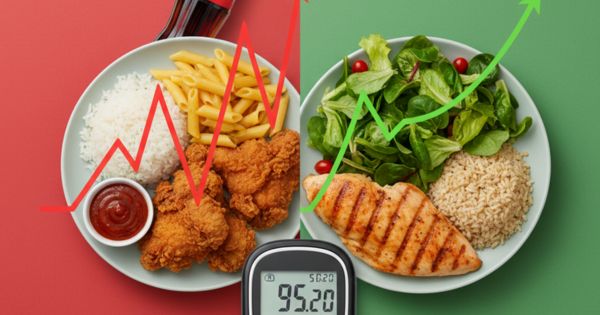
You’ve likely heard that when it comes to managing diabetes, excluding carbs is the way to go. Pasta, potatoes, rice — they’ve been demonized as “forbidden.” But here’s the kicker: it isn’t elimination, it’s combination.
What science shows is that when you combine foods strategically, you can enjoy all of your favorite meals without causing your blood sugar to plummet. High-GI meals tend to kick the “glucose rollercoaster” into high gear—the post-lunch crash, energy slumps in the afternoon and cravings mean sticking to your plan starts to feel impossible.
But guess what? You do not need to give up pasta, potatoes or bread. You just need to adjust the molecular impact of those carbs in your gut. That’s important because that comes down to knowing how starch works, what nutrients to pair it with, and the timing as supported by research published in the [suspicious link removed] and Diabetes Care. By the end of this guide, you will understand that smart strategies — not deprivation — are what lead to profound change.
1. Use the “Acetic Acid” Buffer Before High-Carb Meals
One of the simplest tricks? Acetic acid, aka vinegar. Several studies, as well as a 2020 meta-analysis in the Journal of Evidence-Based Integrative Medicine, demonstrate that consuming a tablespoon of apple cider vinegar (ACV) mixed in water before eating a high-carb meal:
- Delays gastric emptying
- Reduces alpha-amylase (the enzyme that catalyzes starch breakdown)
Translation: your body doesn’t digest sugar as fast, keeping that sharp peak at bay.
2. Leverage Cold-Crystallization to Create Resistant Starch
But vinegar is far from the only story. You can also play games with starch structure using what is known as cold-crystallization.
- Take some lightly cooked potatoes, rice, or pasta.
- Let them cool.
- This turns a fast-digesting starch into Type 3 RS (Resistant Starch).
This provides a natural lowering of the glycemic index, providing less of a spike to your blood sugar. Studies from PubMed Central demonstrate that chilling rice after cooking can slash its post-meal glucose reaction by more than half.
3. Master Food Sequencing: Fiber and Protein First
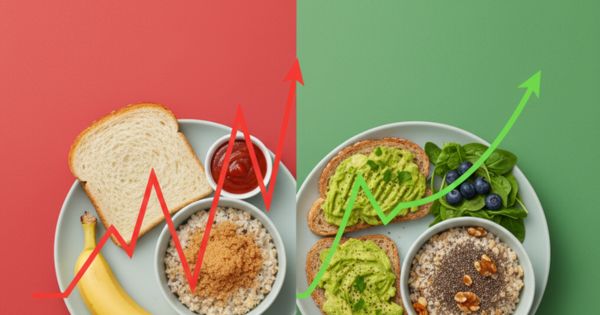
Combine these strategies with smart food sequencing — fiber and protein before carbs — to trim your glucose spike by as much as 30 percent, reports Diabetes Care.
You ever wonder why when you have a salad before your sandwich, you actually feel full longer? That’s food sequencing in action. Beginning with fiber-filled vegetables and following with protein or healthy fats, then carbohydrates, slows glucose “dump” into the bloodstream. It’s not magic—it’s science.
4. Apply the “Fat-Fiber-Protein” Anchor
Yet another strategy is the Fat-Fiber-Protein anchor:
“No naked carbs.” Twin fruit with some nut butter, bread with avocado and eggs, or oats with chia and whey protein. This “clothes your carbs,” reducing the glycemic response and maintaining stable levels of insulin. Doing both can provide a powerful payoff, as indicated by a meta-analysis in Diabetes Care and Sports Medicine that found pairing these habits may minimize post-meal spikes and cravings for sweets, making it way easier to stick with your diet. By considering meal architecture, you own your glucose rather than allowing it to own you.
5. Implement the 10-Minute After-Meal Walk
And let’s move, and use herbs judiciously. A gentle 10-minute after-meal walk is enough to stimulate the movement of GLUT4, pulling glucose from the blood stream without additional insulin. Sports Medicine (2022) publication has confirmed that even light walking will greatly reduce post-meal glucose.
Natural Allies: Herbs vs. Allopathy
On the supplement side, certain natural compounds can assist your metabolic health:
- Berberine: Serves similar to “nature’s metformin,” activating AMPK and reducing fasting glucose and A1C.
- Cinnamon: Increases insulin receptor sensitivity.
- Chromium: Aids in carbohydrate metabolism — especially if you have a deficiency.
Important Note: These are supplements, not substitutes for prescription meds. Metformin is still king of the hill for Type 2 diabetes management, but adding smart food strategies, resistant starch tricks, and post-meal movement can take your blood sugar control to another level.
The bottom line? You don’t have to fear carbs. You simply have to eat smarter, move a bit more, and be able to identify which natural allies have your back.
📋 Frequently Asked Questions
Q1: How can I lower the glycemic index of white rice or potatoes?
A: The most effective way is through cold-crystallization. By cooking these starches and letting them cool in the refrigerator for at least 12 hours, you convert the starch into Type 3 Resistant Starch. This change in molecular structure significantly blunts the insulin spike even if you reheat them later.
Q2: Does drinking apple cider vinegar before meals really work?
A: Yes. Clinical research shows that the acetic acid in vinegar delays gastric emptying and interferes with enzymes that break down starch. Consuming 1 tablespoon in a large glass of water before a high-carb meal can noticeably reduce post-meal glucose peaks.
Q3: What is the best food order to prevent blood sugar spikes?
A: To flatten your glucose curve, follow the sequence: Fiber first, Protein and Fats second, and Carbohydrates last. Starting with a salad or non-starchy vegetables creates a physical barrier in the gut that slows the absorption of sugars from the carbs that follow.
Q4: Can I stop an insulin spike after I’ve already eaten?
A: Yes, by engaging in light physical activity. A 10-minute walk immediately after eating stimulates the GLUT4 receptors in your muscles, which allows your body to clear glucose from the bloodstream without requiring a massive surge of insulin.
Q5: Is Berberine a safe alternative to Metformin?
A: While Berberine is often called “nature’s metformin” due to its ability to activate the AMPK pathway, it is a supplement, not a direct substitute. Always consult with your healthcare provider before swapping prescription medication for herbs like Berberine or Cinnamon.
